
General Dentistry in High Wycombe
At HW Dental Centre, our general dentistry services are designed to protect, restore and maintain your oral health. We provide routine exams, dental hygiene, fillings, tooth extractions, root canals, bridges, crowns and dentures, giving patients access to a full range of essential dental care in High Wycombe.





General Dentistry in High Wycombe
At HW Dental Centre, our general dentistry services are designed to protect, restore and maintain your oral health. We provide routine exams, dental hygiene, fillings, tooth extractions, root canals, bridges, crowns and dentures, giving patients access to a full range of essential dental care in High Wycombe.
Routine Exams
Even if you brush and floss routinely, it is still best to visit your dentist at regular intervals. It is recommended that you have a dental check-up every six months, although some people may need more frequent checks depending on how healthy their teeth and gums are.
The danger of not visiting your dentist regularly is that untreated problems can lead to pain and more difficult, costly treatment in the future. It is always better to deal with problems early, or prevent them altogether where possible.
During your check-up, your dentist will ask about your general health, how your teeth have been since your last visit, and whether you are taking any new or changed medication. They will examine your teeth, gums and mouth, schedule any necessary treatments, tests or X-rays, provide advice on diet, smoking, alcohol and teeth cleaning, and let you know when you should return for your next check-up.
It is routine for your dentist to carry out X-rays on occasion during your dental check-up. Your dentist will decide which type of X-ray you need and explain why it is being taken. X-rays help identify existing problems that may not yet be visible during a routine examination and can also highlight issues that may develop in the future.
If your dentist finds any further problems, they will recommend the next steps. You will be told what treatment may be needed and what options are available. This is usually provided in a written treatment plan, which you will need to approve and sign before treatment begins. Charges for treatment will be clearly displayed and explained.
Routine exam fee: £60.
Dental Hygiene
Our dental hygienists will advise you on correct home care and help you keep your teeth and gums healthy. This includes professionally cleaning your teeth by removing plaque and tartar, often called a scale and polish. One of the most important parts of a hygienist’s role is showing you the best way to keep your teeth free of plaque, the sticky coating that forms constantly on your teeth.
Hygienists also give advice about diet and preventing tooth decay. Our hygienists play a key role in the care and treatment we provide, specialising in periodontal care. Gingivitis, or gum disease, is very common. Early symptoms may include bleeding, swollen or sore gums and bad breath. If left untreated, it may progress to periodontitis, which can eventually result in tooth loss.
During your hygiene appointment, plaque and calculus, also known as tartar, will be removed. This helps prevent the onset of gingivitis and periodontal disease. We will also advise you on a daily oral healthcare routine, recommend suitable dental products and let you know if additional care is required to maintain your gums.
Dental hygiene fee: £75.

Dental Fillings
Our practice uses exclusively white, tooth coloured fillings. There are several reasons for us to prefer this material. White fillings do not raise concerns associated with mercury in silver amalgam fillings, they look more natural because they can be matched to the colour of your teeth, and modern composite materials are strong and reliable.
In certain cases, white fillings can involve less drilling because the cavity does not need to be shaped as much as it would for a silver amalgam filling. If you would like to change old silver amalgam fillings, our dental team can assess whether replacement is appropriate and advise you on the best option.
Dental fillings from £150. (Please note that the cost of fillings varies depending on the size and type of filling used and the time required to complete the treatment.)
Tooth Extractions
There are several common reasons why a tooth may need to be removed. These include pain, abscesses, tooth decay, gum disease, prosthetic treatment such as false teeth, correction of irregular teeth, removal of extra teeth, creating space, or cosmetic reasons.
Usually, tooth removal is straightforward and takes only a few minutes. You should not feel pain during the procedure, although you may feel pressure and hear some noise. After extraction, slight bleeding is normal for a day or so and can usually be controlled with pressure over the area.
Your dentist will advise you on painkillers to help ease any discomfort. Some swelling and bruising can also occur and is often at its worst on the second day, but it should disappear within one or two weeks. You may also have difficulty opening your mouth wide for a short time, which generally returns to normal within one or two weeks.
Tooth extractions from £150. (Please note that the cost of extractions varies depending on the complexity of the case.)
Root Canals
Root canal treatment, also known as endodontics, is a dental procedure used to treat infection at the centre of a tooth. The root canal system contains the dental pulp and extends from the crown of the tooth to the end of the root.
The infection is caused by bacteria that live in the mouth and invade the tooth. X-rays can show whether the pulp has been damaged by bacterial infection. Root canal treatment involves removing the bacteria from the root canal system.
After the bacteria have been removed, the root canal is filled and the tooth sealed with a filling or crown. In most cases, the inflamed tissue near the tooth heals naturally. Before treatment, you will usually be given a local anaesthetic, which means the procedure should not be painful and should feel no more unpleasant than having a filling.
It is important to look after your teeth while recovering from root canal treatment. You should avoid biting on hard foods until all treatment is complete. After your final treatment, your restored tooth should not be painful, although it may feel sensitive for a few days.
Root canals from £450. (Please note that fees for root canals vary depending on the complexity of each case.)
Bridges
A missing tooth creates a problem for your dental health because the teeth next to the space can lean into the gap and change the way the upper and lower teeth bite together. This can lead to food becoming packed into the gap, which can cause tooth decay and gum disease.
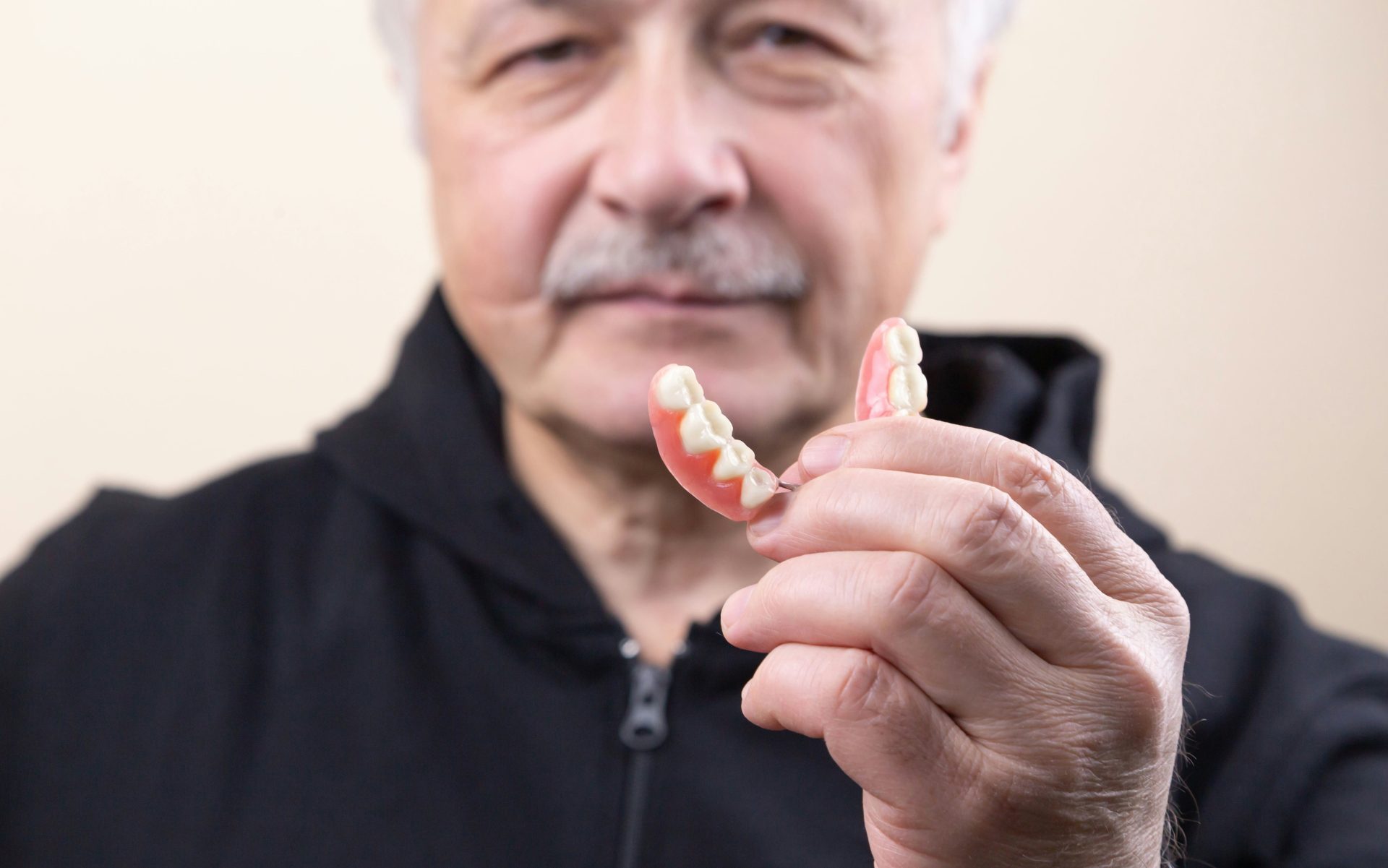
There are three main ways to replace missing teeth. The first is with a removable false tooth or teeth, called a partial denture. The second is with a fixed bridge. A bridge is usually used when there are fewer teeth to replace or when the missing teeth are only on one side of the mouth. The third option is dental implants.
A bridge is a fixed replacement for a missing tooth or teeth, attached to the natural teeth on either side of the gap. Bridges are usually made of porcelain bonded to precious metal, although other materials may be used for strength. Some bridges are made entirely from strong porcelain.
A bridge can improve how you look, bite, chew and speak. The teeth can be matched to the colour of your natural teeth, and a bridge can last for many years if kept clean and not accidentally damaged. Bridges also help protect natural teeth from wear, movement or tilting, which could otherwise affect your bite.
You need to clean your bridge every day to prevent problems such as bad breath and gum disease. You also need to clean under the false tooth daily. Your dentist or hygienist will show you how to use a bridge needle or special floss, as a normal toothbrush cannot reach this area.
Bridges from £950. (Please note that fees for bridges vary depending on the complexity of each case.)

Crowns
A dental crown, sometimes known as a cap, is used to restore teeth that have been broken or weakened by decay or a very large filling. A crown fits over the remaining part of the tooth, making it strong and giving it the shape of a natural tooth.
The dentist will prepare the tooth to the ideal shape for the crown. This involves removing a layer of the outer surface, leaving a strong inner core. Once the tooth is shaped, the dental team will take an impression of the prepared tooth.
In root filled teeth, it may be necessary to insert a post into the tooth root before placing a crown. A post gives support and helps the crown stay in place. The surface of the tooth may be removed down to the level of the gum.
When you and your dentist are happy with the fit and appearance of the new crown, it will be fixed in place with special dental cement or adhesive. The cement forms a seal to hold the crown securely. How long your crown lasts depends on how well you look after it, but properly cared for crowns should last for many years.
Crowns from £600. (Please note that fees for crowns vary depending on the type of crown, the complexity of the case and the materials used.)
Dentures
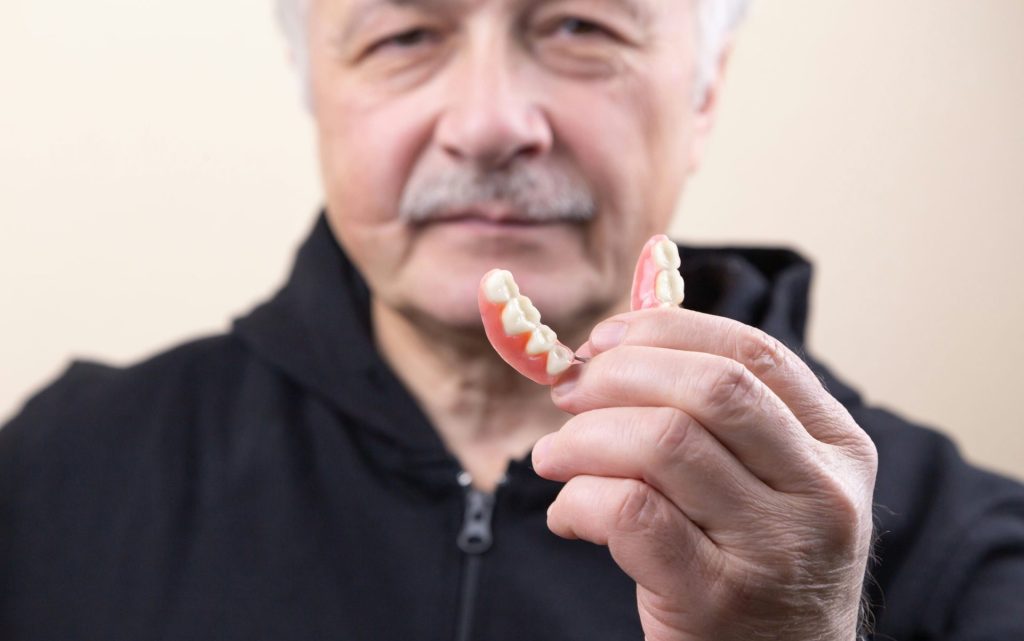
People wear dentures to replace lost or missing teeth so they can enjoy a healthy diet and smile with confidence. Dentures are removable false teeth that fit snugly over the gums to replace missing teeth. They help with chewing and can eliminate potential problems caused by gaps.
Dentures can be made from acrylic resin, metal, or a combination of acrylic and metal. A complete or full denture replaces all natural teeth in either the upper or lower jaw. A partial denture fills spaces left by lost or missing teeth.
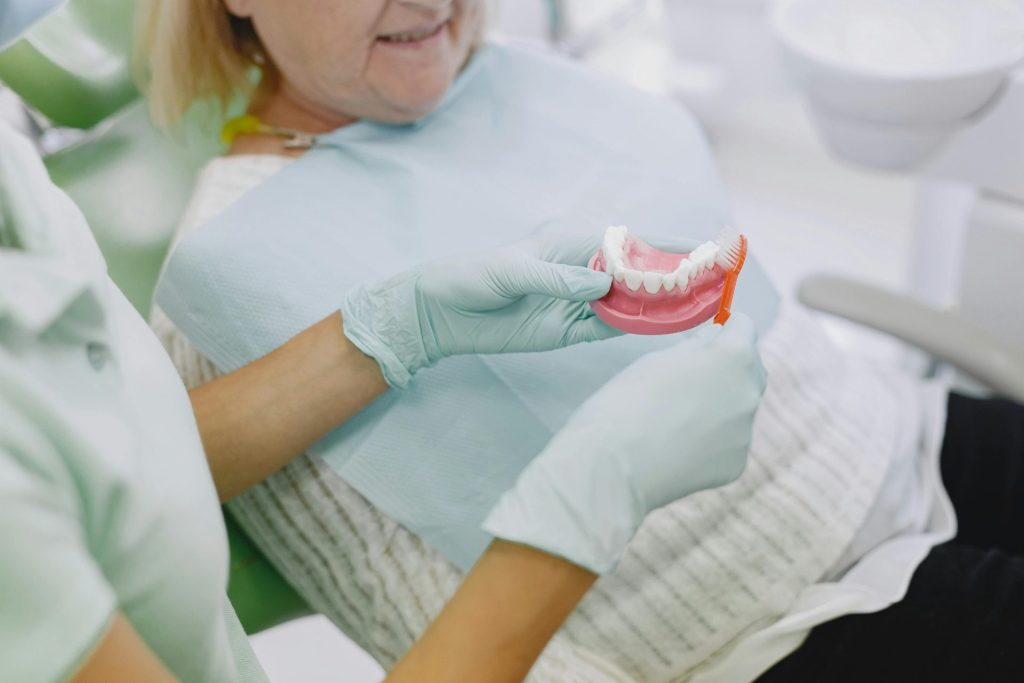
Dentures may break if dropped, so they should always be cleaned over a bowl of water or a folded towel. The general rule for denture care is to brush and soak every day. Brush your dentures first to remove food, using a non-abrasive denture cleaner rather than toothpaste. Avoid scrubbing too hard, as this may cause grooves in the surface.
Soak your dentures daily in a denture cleaning solution. This helps remove plaque and stubborn stains and disinfects the dentures, leaving them feeling fresher. Do not keep dentures in overnight unless there are specific reasons for doing so.
Dentures from £450. (Please note that fees for dentures vary depending on the complexity of each case and the material used.)
Book General Dental Care

Address
20A High St, High Wycombe HP11 2BE, UK
Contact
Phone.: 0149 444 4076
Email: info@hwdentalcentre.co.uk

Phone.: 0149 444 4076
Email: info@hwdentalcentre.co.uk
